Days 1-4
Days 5-8
Day 9: Crowland, Lincolnshire. This is where it all began, in a way. Our great-great-great-grandfather, Joseph Sutton, came to Crowland at some point and married a young widow called Elizabeth Price. She was from a long-established Crowland family by the name of Cherrington and had recently inherited a large sum of money from her wealthy uncle. Joseph Sutton had a business in West Street in which he was variously and sometimes concurrently a grocer, draper and postmaster.
Click on the pictures for a closer look and use the back button to return to the blog.
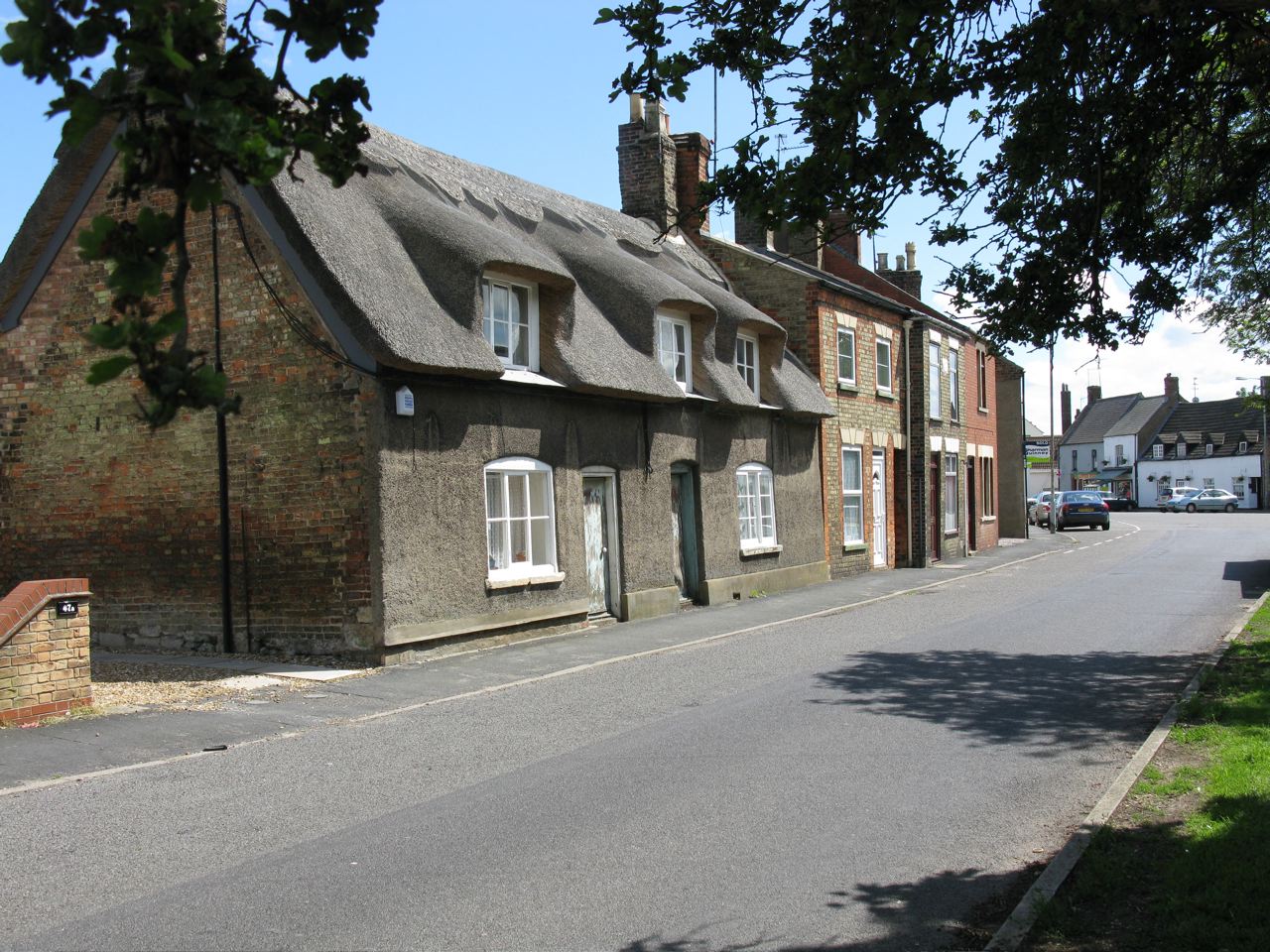
This is where West Street meets South Street today. Few buildings at the beginning of West Street date as far back as 1840, when we know Joseph had his shop, but there are many other buildings further down the street that do. Since we don't know exactly where his shop was, we can only try to imagine how it looked based on what we can see now.
The pub on the corner of North Street, bedecked in England flags for the 2010 World Cup, dates back to 1789. It faces Trinity Bridge - originally built to provide a dry crossing over three converging streams but now provides an intriguing focal point in the middle of the road. I can imagine generations of children playing on, under and around it.
This is North Street, as seen from the top of the bridge.
This small Fenland town is quiet, flat and has plenty of wide open space and isn't crowded with people and traffic.
At the South end of the town stands the church of Saints Mary Bartholomew and Guthlac which is built within the ruins of Croyland Abbey.
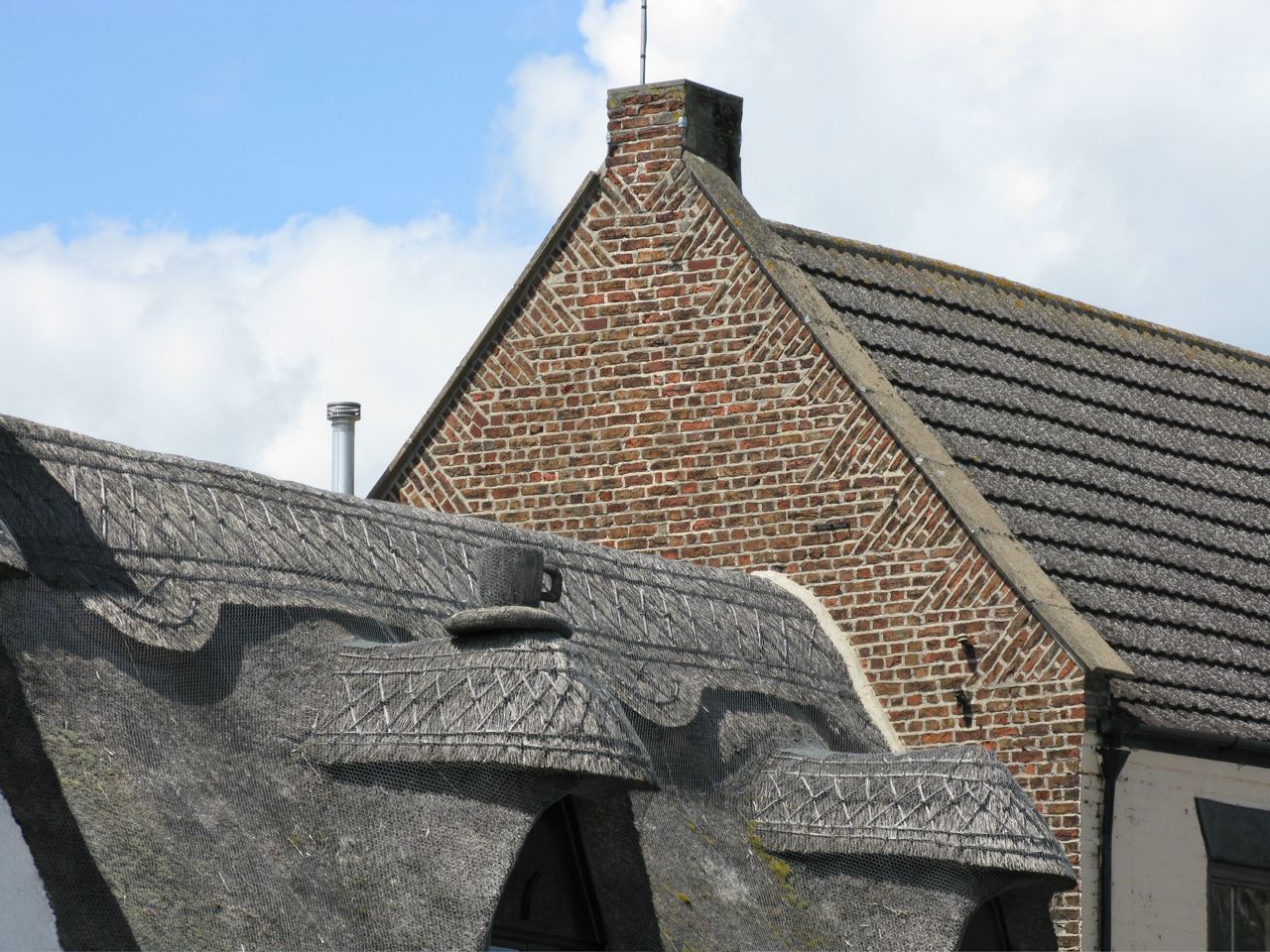
The thatched roof of the Copper Kettle Tea Room with its thatched tea cup abuts another building with ornate brickwork commonly found in houses of the 17th century.
Time for lunch at the Copper Kettle.
This is absolutely the best tea room in England. Look at that. That was my lunch. Then look at this:
All the cakes are freshly baked on the premises. I had a slice of the chocolate and orange cake on the right, but I must say I would have loved to have tasted that lemon cake in the middle. The tea room is housed in what was a Victorian pharmacy for the doctor who worked next door.
Now for more of Crowland. The following are all photographs of West Street.
More of Crowland.
Next time, Croyland Abbey.
Friday, July 2, 2010
Thursday, July 1, 2010
Back to my homeland (part 2)
Days 1-4
Day 5: It was a Friday of some driving and some research. We had lunch at a canalside pub. How very English.
Click on the pictures for a closer look and use the back button to return to the blog.
Unfortunately I have no idea where we were, but it was quite idyllic.
Most English canals and locks date back at least to the 18th century. (Unless someone knows better.)
After lunch we went to the Northampton Records Office to research our great-great-great grandfather who was from Peterborough, and then we went to our weekend accommodation. We stayed for the whole weekend at the Axe and Compass, a pub near Leighton Buzzard. (You can Google it if you'd like to see it.)
Day 6: It was unfortunate that we picked a Saturday to visit St. Alban's because it was very busy and there were delays on the roads going into the city. We managed to do what we set out to do, though. We drove along Colney Heath Lane where our great-aunt and uncle had lived for many years. We also visited the town museum where we took our donation of four miniature bottles of Roses cordials (made in St Alban's) and we found the burial place of our third set of great-grandparents.
The grave was unmarked so my sister marked the place herself for the benefit of my camera. I hope they didn't mind her lying on top of them, but I think great-grandad had a sense of humour...
We returned to the Axe and Compass for dinner and the US v England World Cup game.
That's a heart attack on a polystyrene tray, that is! Sausage roll, chips and baked beans, all washed down with a glass of Pimms.
Day 7: This was going to be our rest day. We went to Milton Keynes to meet a very old school friend for lunch, and to do a little shopping. We didn't do much but we did walk around a little bit. It was nice. The rest of the day we just meandered around the Buckinghamshire countryside.
Day 8: On the Monday we left the Axe and Compass and drove to Lincolnshire where me met another old friend in a pub by a shopping outlet near Spalding. It was a brief meeting but it was lovely to see her again.
After lunch we made our way to Stamford to see where our great-great grandfather's brothers had gone to school. It was my first visit to Stamford and as soon as I arrived In knew that a couple of hours weren't going to be enough. It's on my list of places to visit again for an extended time.
See what I mean? Lovely.
More to come another day.
Day 5: It was a Friday of some driving and some research. We had lunch at a canalside pub. How very English.
Click on the pictures for a closer look and use the back button to return to the blog.
Unfortunately I have no idea where we were, but it was quite idyllic.
Most English canals and locks date back at least to the 18th century. (Unless someone knows better.)
After lunch we went to the Northampton Records Office to research our great-great-great grandfather who was from Peterborough, and then we went to our weekend accommodation. We stayed for the whole weekend at the Axe and Compass, a pub near Leighton Buzzard. (You can Google it if you'd like to see it.)
Day 6: It was unfortunate that we picked a Saturday to visit St. Alban's because it was very busy and there were delays on the roads going into the city. We managed to do what we set out to do, though. We drove along Colney Heath Lane where our great-aunt and uncle had lived for many years. We also visited the town museum where we took our donation of four miniature bottles of Roses cordials (made in St Alban's) and we found the burial place of our third set of great-grandparents.
The grave was unmarked so my sister marked the place herself for the benefit of my camera. I hope they didn't mind her lying on top of them, but I think great-grandad had a sense of humour...
We returned to the Axe and Compass for dinner and the US v England World Cup game.
That's a heart attack on a polystyrene tray, that is! Sausage roll, chips and baked beans, all washed down with a glass of Pimms.
Day 7: This was going to be our rest day. We went to Milton Keynes to meet a very old school friend for lunch, and to do a little shopping. We didn't do much but we did walk around a little bit. It was nice. The rest of the day we just meandered around the Buckinghamshire countryside.
Day 8: On the Monday we left the Axe and Compass and drove to Lincolnshire where me met another old friend in a pub by a shopping outlet near Spalding. It was a brief meeting but it was lovely to see her again.
After lunch we made our way to Stamford to see where our great-great grandfather's brothers had gone to school. It was my first visit to Stamford and as soon as I arrived In knew that a couple of hours weren't going to be enough. It's on my list of places to visit again for an extended time.
See what I mean? Lovely.
More to come another day.
Wednesday, June 30, 2010
Back to my homeland (part 1)
My recent visit to England and Wales was filled with visiting, exploring, talking, and driving. I think my sister and I drove about 1200 miles in the course of two and a half weeks and we managed to avoid most traditional tourist destinations while we explored our own heritage.
Day 1 - From West London to a village a few miles from Bath; spent the afternoon with an old friend. From there to Caerphilly. (We saw the castle across the way but didn't visit.) Sadly, due to rain and jet-lag I forgot to make use of my camera that day.
Day 2 - A day in South Wales: we visited two cemeteries, one gift shop/tea room, and an M&S cafe. It doesn't sound much but it took us all day!
Our great-grandmother died in childbirth in 1897. We hope she had a sense of humour because that's my sister peeping out from behind the headstone.
There was a stormy sky over the cemetery, but it has a spectacular view and is surprisingly quiet. It is the final resting place of two great-grandmothers, two great-aunts, four great-uncles, a grandfather, a great-grandfather and, several young children of our family.
Day 3 - We drov to Hereford. We stopped at another cemetery but we couldn't find anyone we knew. It's a shame that so many stones are illegible.
We travelled via the Brecon Beacons. I love this. Photos just can't do it justice.
We loved our afternoon with cousins and we enjoyed their spectacular garden. This is just one corner of it.
Day 4 - Quite a busy day on which we began the day in Monmouth, continued into Kinlet (Shropshire) and Kinver (Staffordshire) and ended up visiting more cousins in in Worcestershire.
This is the interior of Kinlet parish church. If my family research is correct, this is the church at which one of my sixteen great-great-great-grandmothers was Christened.
We stayed here for the night, with our cousin. Parts of the cottage date as far back as 1490. Its the first and only time I've slept under a thatched roof (not including a certain mud hut in Morocco).
That's enough for today... more tomorrow.
Day 1 - From West London to a village a few miles from Bath; spent the afternoon with an old friend. From there to Caerphilly. (We saw the castle across the way but didn't visit.) Sadly, due to rain and jet-lag I forgot to make use of my camera that day.
Day 2 - A day in South Wales: we visited two cemeteries, one gift shop/tea room, and an M&S cafe. It doesn't sound much but it took us all day!
Our great-grandmother died in childbirth in 1897. We hope she had a sense of humour because that's my sister peeping out from behind the headstone.
There was a stormy sky over the cemetery, but it has a spectacular view and is surprisingly quiet. It is the final resting place of two great-grandmothers, two great-aunts, four great-uncles, a grandfather, a great-grandfather and, several young children of our family.
Day 3 - We drov to Hereford. We stopped at another cemetery but we couldn't find anyone we knew. It's a shame that so many stones are illegible.
We travelled via the Brecon Beacons. I love this. Photos just can't do it justice.
We loved our afternoon with cousins and we enjoyed their spectacular garden. This is just one corner of it.
Day 4 - Quite a busy day on which we began the day in Monmouth, continued into Kinlet (Shropshire) and Kinver (Staffordshire) and ended up visiting more cousins in in Worcestershire.
This is the interior of Kinlet parish church. If my family research is correct, this is the church at which one of my sixteen great-great-great-grandmothers was Christened.
We stayed here for the night, with our cousin. Parts of the cottage date as far back as 1490. Its the first and only time I've slept under a thatched roof (not including a certain mud hut in Morocco).
That's enough for today... more tomorrow.
Tuesday, June 29, 2010
Aftermath
My, but it's been a long time since I wrote here.
Turning intentions into accomplishments and getting my thoughts in order are proving difficult tasks at present, because even though I've been home for six days, I'm still feeling the effects of jet-lag. My brain is a jumble of holiday (vacation) memories mixed with thoughts of things I'm supposed to be doing, coupled with plans for projects I want to tackle but which are almost too overwhelming to contemplate. I suppose I'm also just plain tired after travelling and living out of a suitcase for seventeen days.
Foremost in my mind is what is contained in a certain shoebox which my sister gave me to bring home. It is the latest addition to what is becoming a rather sizable family archive, although this is of more personal significance because the box contains letters written by my father to my mother between when they first met in 1949 and when he moved to London to live nearer to her.
My dad died when I was only thirteen, so I never got to know him as an adult, and these letters are an insight into how he thought, and what his life was like as a young man. I've only read about half a dozen of them - less than a quarter of the total - but each one brings new insight and food for thought. It's a pity the letters my mum wrote to him didn't survive.
Turning intentions into accomplishments and getting my thoughts in order are proving difficult tasks at present, because even though I've been home for six days, I'm still feeling the effects of jet-lag. My brain is a jumble of holiday (vacation) memories mixed with thoughts of things I'm supposed to be doing, coupled with plans for projects I want to tackle but which are almost too overwhelming to contemplate. I suppose I'm also just plain tired after travelling and living out of a suitcase for seventeen days.
Foremost in my mind is what is contained in a certain shoebox which my sister gave me to bring home. It is the latest addition to what is becoming a rather sizable family archive, although this is of more personal significance because the box contains letters written by my father to my mother between when they first met in 1949 and when he moved to London to live nearer to her.
My dad died when I was only thirteen, so I never got to know him as an adult, and these letters are an insight into how he thought, and what his life was like as a young man. I've only read about half a dozen of them - less than a quarter of the total - but each one brings new insight and food for thought. It's a pity the letters my mum wrote to him didn't survive.
Sunday, May 16, 2010
More of the best museum that no-one knows about
To continue with my thoughts on the Museum of World War Two.
Almost every part of the museum was of great interest to me, particularly to see the many things I had only ever seen in pictures or on film. After the Holocaust section - which was much as I had expected even though I had to keep reminding myself that I wasn't looking at replicas but at authentic artifacts that had really been used, I found myself in wartime Britain. Churchill's overalls, letters between him and Roosevelt, the D-Day plans. Yes. The real D-Day plans. There were German air-raid maps of London with potential (and actual) bomb sites marked out in red, including places very close to where my mother and her family lived at that time.
Another fascinating section concerned Special Operations and the French Resistance. Tiny tools and gadgets for sabotage. Secret radios hidden in attache cases and biscuit tins. garottes, guns, cyanide capsules, secret maps, parachutes, explosives, blades hidden in shoe heels and knives hidden in sleeves. Then we saw Enigma machines - those complicated coding devices used with enormous success by Germany until one fell into British hands and provided the key to seemingly unbreakable codes. There were also devices provided to airmen to aid them in escape attempts in the event of them being captured. There were miniature compasses hidden in uniform buttons, blades hidden inside pencils sent in Red Cross parcels and maps printed on silk and sewn into uniform linings. The ingenuity was astounding.
I'm less interested in weaponry and warfare per se, so I didn't spend long looking at the Sherman tank or guns or bits of cockpits from shot-down aircraft. There was not as much from the North-African theatre or Italy, but they did have Monty's uniform, which was much as expected. I was surprised to see what to me looked like the uniform of a soldier from a Welsh regiment (because of the Welsh dragons on the collar) marked as a Ghurka uniform. I wasn't so sure of myself as to say anything to the curator, but now I've had a chance to look it up and have found that it was mislabelled, I'll probably drop him a line.
There is so much I haven't written about here and I'm afraid I haven't done justice to any of it. The web site has some pictures which give a taste of what there is to see so I suggest you take a look yourself if you are intrigued. I am so glad we went there. It was a riveting, fascinating visit. We took over four hours to look around and didn't sit down, take a break or have any food or drink in all that time.
Near the end, and rather unexpectedly, there were more of Hitler's belongings. We'd already seen his uniform and reading glasses, but now there was an entire table-setting of monogrammed linens, hand-painted china and Hitler's favourite tea cup.
There was even china, including a broken plate, and a chair which were found in his Bunker. Then there was a strip of blue and white fabric which had been cut from the sofa on which Hitler and Eva Braun are supposed to have committed suicide. It had been brought home by General Patton. The oddest and most unexpected things.
Go and see for yourself: Museum of World War II
Almost every part of the museum was of great interest to me, particularly to see the many things I had only ever seen in pictures or on film. After the Holocaust section - which was much as I had expected even though I had to keep reminding myself that I wasn't looking at replicas but at authentic artifacts that had really been used, I found myself in wartime Britain. Churchill's overalls, letters between him and Roosevelt, the D-Day plans. Yes. The real D-Day plans. There were German air-raid maps of London with potential (and actual) bomb sites marked out in red, including places very close to where my mother and her family lived at that time.
Another fascinating section concerned Special Operations and the French Resistance. Tiny tools and gadgets for sabotage. Secret radios hidden in attache cases and biscuit tins. garottes, guns, cyanide capsules, secret maps, parachutes, explosives, blades hidden in shoe heels and knives hidden in sleeves. Then we saw Enigma machines - those complicated coding devices used with enormous success by Germany until one fell into British hands and provided the key to seemingly unbreakable codes. There were also devices provided to airmen to aid them in escape attempts in the event of them being captured. There were miniature compasses hidden in uniform buttons, blades hidden inside pencils sent in Red Cross parcels and maps printed on silk and sewn into uniform linings. The ingenuity was astounding.
I'm less interested in weaponry and warfare per se, so I didn't spend long looking at the Sherman tank or guns or bits of cockpits from shot-down aircraft. There was not as much from the North-African theatre or Italy, but they did have Monty's uniform, which was much as expected. I was surprised to see what to me looked like the uniform of a soldier from a Welsh regiment (because of the Welsh dragons on the collar) marked as a Ghurka uniform. I wasn't so sure of myself as to say anything to the curator, but now I've had a chance to look it up and have found that it was mislabelled, I'll probably drop him a line.
There is so much I haven't written about here and I'm afraid I haven't done justice to any of it. The web site has some pictures which give a taste of what there is to see so I suggest you take a look yourself if you are intrigued. I am so glad we went there. It was a riveting, fascinating visit. We took over four hours to look around and didn't sit down, take a break or have any food or drink in all that time.
Near the end, and rather unexpectedly, there were more of Hitler's belongings. We'd already seen his uniform and reading glasses, but now there was an entire table-setting of monogrammed linens, hand-painted china and Hitler's favourite tea cup.
There was even china, including a broken plate, and a chair which were found in his Bunker. Then there was a strip of blue and white fabric which had been cut from the sofa on which Hitler and Eva Braun are supposed to have committed suicide. It had been brought home by General Patton. The oddest and most unexpected things.
Go and see for yourself: Museum of World War II
Saturday, May 15, 2010
The best museum that no-one knows about
Last weekend, DH and I spent a fascinating four-and-a-half-hours at a museum unlike any that I have ever visited before.
The story begins with an air of mystery and intrigue. The museum itself has existed for ten years but it's only in the past year that it has begun to advertise itself just a little. I found it purely by chance last November when Googling for museums in the area. I have yet to find anyone else who has heard of it, so it was quite exciting. It's the Museum of World War Two and it's located here:
I'm deliberately being obtuse because the exact location isn't disclosed on the web site and we only received the address because we were granted permission to visit with a date and time, on which to do so. We were asked to state our interest in the museum - that is, we had to explain our reasons for wanting to see the War artifacts on display. After a series of e-mail exchanges it was agreed that we could visit on 8th May, 2010, which coincidentally was the 65th anniversary of V.E. Day.
We already knew roughly what to expect, having studied the web site at some length, but I still wasn't quite prepared for the impact of coming face to face with the genuine (and extraordinarily well-preserved) posters, flags and uniforms from Nazi Germany which were found in the first section of the museum. Signed and handwritten papers and documents and countless small personal items belonging to Hitler, Goebbels and other top-ranking Nazi officials were in display cases, but you could actually reach out and touch the sleeve of Hitler's uniform (I didn't) or an SS officer's hat. I spent long enough in that small section of the museum to begin to see why the German people, after the 1920s depression welcomed what appeared to be better times. At the same time, you could see the darker side. So many things were banned or forbidden. There were enamel signs proclaiming that Jews were not welcome, or that "we greet with Heil Hitler". Such things made me shudder and I imagine that they made some Germans shudder too.
This is an interactive hands-on museum in the sense that many of the artifacts - not replicas - are on open display and the visitor is allowed to pick them up to look more closely. Interestingly, few people did, and very little was touched. It all looked too fragile to me. In the Holocaust section there were two inmate uniforms and some guard uniforms. I was almost afraid to do so, but I picked up and examined the crude wooden soled shoes of a concentration camp inmate and wondered who their owner had been. There were rusty nails in the soles, presumably for reinforcement. The uppers were of stiff, rough leather. Another pair looked like a pair of sandals, and yet another appeared to have been woven from straw and were more like slippers than shoes. In stark contrast the SS guards had handsome black uniforms and weapons which were designed to impress and instill fear. In the same section of the museum is the letter sent to Otto Frank after the war, describing how Anne and her sister died.
More to come...
The story begins with an air of mystery and intrigue. The museum itself has existed for ten years but it's only in the past year that it has begun to advertise itself just a little. I found it purely by chance last November when Googling for museums in the area. I have yet to find anyone else who has heard of it, so it was quite exciting. It's the Museum of World War Two and it's located here:
I'm deliberately being obtuse because the exact location isn't disclosed on the web site and we only received the address because we were granted permission to visit with a date and time, on which to do so. We were asked to state our interest in the museum - that is, we had to explain our reasons for wanting to see the War artifacts on display. After a series of e-mail exchanges it was agreed that we could visit on 8th May, 2010, which coincidentally was the 65th anniversary of V.E. Day.
We already knew roughly what to expect, having studied the web site at some length, but I still wasn't quite prepared for the impact of coming face to face with the genuine (and extraordinarily well-preserved) posters, flags and uniforms from Nazi Germany which were found in the first section of the museum. Signed and handwritten papers and documents and countless small personal items belonging to Hitler, Goebbels and other top-ranking Nazi officials were in display cases, but you could actually reach out and touch the sleeve of Hitler's uniform (I didn't) or an SS officer's hat. I spent long enough in that small section of the museum to begin to see why the German people, after the 1920s depression welcomed what appeared to be better times. At the same time, you could see the darker side. So many things were banned or forbidden. There were enamel signs proclaiming that Jews were not welcome, or that "we greet with Heil Hitler". Such things made me shudder and I imagine that they made some Germans shudder too.
This is an interactive hands-on museum in the sense that many of the artifacts - not replicas - are on open display and the visitor is allowed to pick them up to look more closely. Interestingly, few people did, and very little was touched. It all looked too fragile to me. In the Holocaust section there were two inmate uniforms and some guard uniforms. I was almost afraid to do so, but I picked up and examined the crude wooden soled shoes of a concentration camp inmate and wondered who their owner had been. There were rusty nails in the soles, presumably for reinforcement. The uppers were of stiff, rough leather. Another pair looked like a pair of sandals, and yet another appeared to have been woven from straw and were more like slippers than shoes. In stark contrast the SS guards had handsome black uniforms and weapons which were designed to impress and instill fear. In the same section of the museum is the letter sent to Otto Frank after the war, describing how Anne and her sister died.
More to come...
Counter action!
Just a brief word to let the world know that the counter is back and the sink is where it ought to be! I'm sure you've all heard enough about it so that's all I'm going to say!
Subscribe to:
Posts (Atom)